


There exists a threshold between what fades and what endures. This is where my work begins.
Each photograph captures a single moment: a rose meeting dawn, shadow deepening mystery, light making petals luminous. From that encounter to the finished print in your hands, every step honors the beauty being preserved.
These are not mere images. They are moments transformed into companions for your walls. Created with museum-quality materials. Printed by artisans who understand that craft matters. Designed to outlive us all.
Fine Art Print Care & Preservation Guide
Where Petals Meet Forever
When fleeting beauty becomes eternal treasure. Each print holds the promise of preservation, crafted to endure through generations.
Paper is not merely canvas. It is the foundation where beauty endures, where color speaks truth, where moments become legacy.
II. THE COLLECTION
Three formats welcome beauty home

Commanding Presence
16 × 20 and 18 × 24 inches
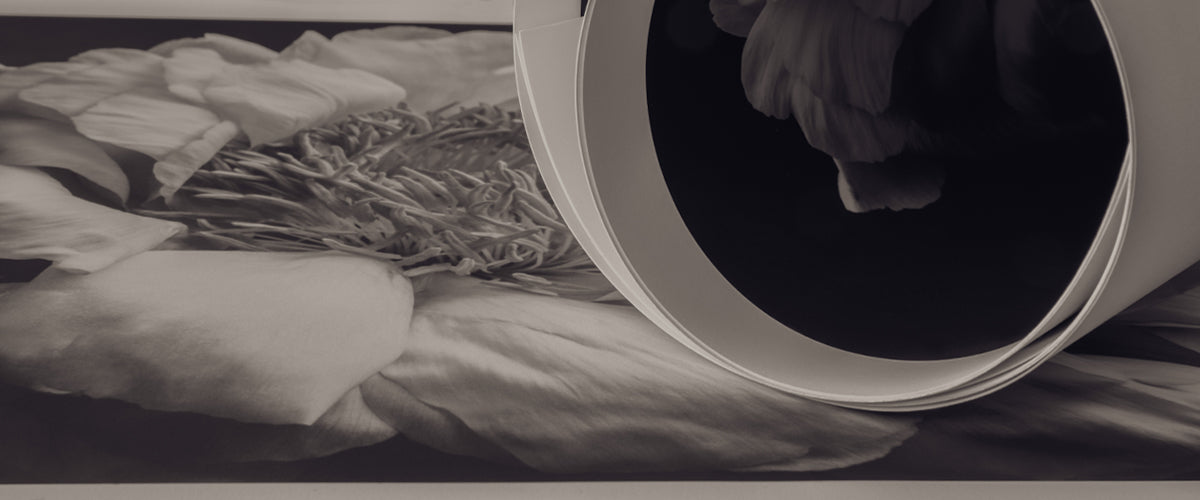
These larger pieces arrive in a custom box containing your rolled print protected by glassine paper, white cotton gloves, and a signed Certificate of Authenticity. Everything needed to unveil and preserve your work.
Each certificate is numbered and sealed. This is documented beauty, ready to be passed through generations.
Perfect for spaces that welcome transformation: living rooms that need a focal point, bedrooms where morning light pools, galleries that honor artistry.
Your print arrives protected, ready to command attention and transform the space it inhabits.

Timeless Elegance
8 × 10 inches
This size balances classical grace with contemporary living. Your print arrives flat, protected by acid-free materials and pH neutral backing, wrapped in vellum and nestled in a custom book box that opens with satisfying weight.
Inside: white cotton gloves and a signed Certificate of Authenticity, numbered and sealed. Everything needed to handle and preserve your work.
100% recyclable.
Impossibly refined in its simplicity.
Unboxing becomes meditation. A pause to receive beauty with the attention it deserves.
Perfect for intimate spaces: the wall beside your bed where morning light pools, a quiet reading corner, the corner of your desk where you create.
Every layer of protection chosen with care—making the experience feel less like transaction, more like exchange between maker and collector.

Whispered Treasures
5 × 7 inches
These prints arrive protected by frosted vellum paper in hand-finished gusset envelopes sealed with traditional wax, presented in a 100% cotton bag. Each is Giclée printed on museum-quality archival paper. Meant to be held close, tucked beside books, framed for your desk, or gifted to someone who speaks the language of flowers.
For those who believe beauty dwells not only in grand gestures but in everyday moments, these prints offer endless possibilities. A treasure in a drawer, a framed reminder, or a gift wrapped with care.
Perfect for gallery walls, bedside tables, desks and workspaces, bookshelves, or the quiet corners where you pause throughout your day.

Canson® Infinity Arches® 88
Woven in France. Chosen for its soul.
This is not convenience. This is heritage, chosen for its ability to honor every gradient, every subtlety, every nuance of color that makes beauty endure.
Museum Legacy
Giclée printing with archival precision. Sharpest results that preserve not just image, but feeling.
Luminous Clarity
99.10% opacity, 95.85% brightness. Light dances across the surface.
Eternal Promise
400-year lifespan for black & white, 200 years for color. Beauty designed to outlive lifetimes.
Color Poetry
No optical brightening agents to deceive the eye. Only superb color rendition with blacks deep as midnight, whites pure as first snow, and tonal range that captures every nuanced shift between light and shadow.
Weight & Presence
310 gsm with 19.09 mil thickness—carrying substantial presence while maintaining the most graceful elegance
Surface Soul
Extra-smooth velvet finish with a soft, supple embrace—offering tactile luxury that transforms each viewing into an intimate sensory experience
Composition
100% cotton threads, acid and lignin-free, pH buffered—engineered not merely for preservation, but for the eternal safekeeping of beauty itself.
Heritage
Born in the heart of France, crafted with centuries of papermaking wisdom—where history and innovation dance together in perfect harmony
Caring for Your Prints
Each print is crafted with intention—here's how to honor and preserve its beauty
Earth-Honoring
100% recyclable packaging, locally-sourced materials throughout.
Creating beauty shouldn't cost the earth its magnificence.
Carbon Nurturing
One tree planted for every print collected. Contributing to tomorrow's forests.
More shade. More beauty. More breath for future generations.
Rooted in Community
Materials sourced locally when possible. Supporting artisans who understand craft.
Every choice honors both maker and earth.
Waste-Free Creation
Each piece printed on demand by fine art studios where zero waste meets exceptional care.
Small businesses. Sustainable practice. Zero excess.
Ethical Harmony
Collaboration with partners who honor their workers, using materials that respect the earth.
Fair practice. Sustainable materials. Conscious creation.
Built to Endure
Archival materials designed for centuries, not seasons.
One print. Generations of beauty.
Swipe to explore
Earth-Honoring
100% recyclable packaging, locally-sourced materials throughout.
Creating beauty shouldn't cost the earth its magnificence.
Carbon Nurturing
One tree planted for every print collected. Contributing to tomorrow's forests.
More shade. More beauty. More breath for future generations.
Rooted in Community
Materials sourced locally when possible. Supporting artisans who understand craft.
Every choice honors both maker and earth.
Waste-Free Creation
Each piece printed on demand by fine art studios where zero waste meets exceptional care.
Small businesses. Sustainable practice. Zero excess.
Ethical Harmony
Collaboration with partners who honor their workers, using materials that respect the earth.
Fair practice. Sustainable materials. Conscious creation.
Built to Endure
Archival materials designed for centuries, not seasons.
One print. Generations of beauty.
The Art of Preservation
Your fine art print is created on museum-quality Canson® Arches® 88 archival paper, designed to maintain its beauty for centuries when properly cared for. These guidelines ensure your print remains as vibrant and pristine as the day it arrived.
Handling with Care
Always use clean cotton gloves when handling your print directly. Natural oils from skin transfer to archival paper and cause permanent discoloration over time. Hold prints by the edges only, supporting the full weight to prevent bending or creasing. Before unpacking your print, wash and dry your hands thoroughly if gloves are not available. Never touch the printed surface itself. When moving your print, carry it flat or support it from underneath to prevent sagging or warping. For larger prints, enlist help to ensure even support across the entire surface. The archival quality of museum-grade paper means these precautions preserve your investment for generations.
Storage Guidelines
Store your print flat in a cool, dry location away from direct sunlight and humidity. Use acid-free tissue paper or glassine as interleaving between prints if stacking. Never store prints rolled for extended periods, as this causes permanent curl and potential cracking along fold lines. Archive boxes made from acid-free materials provide ideal long-term storage. Keep prints away from attics, basements, and areas with temperature fluctuations. Avoid storing prints near heating vents, windows, or exterior walls where condensation might occur. For valuable or particularly meaningful prints, climate-controlled storage maintains consistent conditions year-round. When transporting prints, use rigid backing boards to prevent bending and protect corners with acid-free corner protectors.
Creating the Right Environment
Fine art prints thrive in stable environments. Maintain indoor humidity between 40-50% to prevent paper expansion or contraction. Temperature should remain between 65-75°F (18-24°C) with minimal fluctuation. Direct sunlight fades any print over time, regardless of paper quality. Position your artwork away from windows or use UV-filtering window film. Indirect natural light or quality artificial lighting allows you to enjoy your print without accelerating degradation. Track lighting, picture lights, or ambient room lighting work well for display. Avoid hanging prints above radiators, fireplaces, or in bathrooms where steam and temperature swings occur. Air circulation prevents moisture buildup but avoid placing prints directly in front of heating or cooling vents. These conditions preserve the archival integrity of museum-quality paper and maintain color accuracy for centuries.
Framing Requirements
Museum-quality framing protects your investment and enhances its presentation. Always use UV-filtering glass or acrylic glazing to block 99% of harmful ultraviolet light. Ensure the glass does not touch the print surface by using spacers or matting that creates a gap between glass and paper. Acid-free mats and backing boards prevent chemical migration that causes yellowing. Never use standard cardboard, foam core, or non-archival materials in contact with your print. Conservation mounting techniques allow for print removal without damage if needed in the future. Sealed backing prevents dust, insects, and environmental contaminants from reaching your print from behind. Professional framers experienced with fine art understand these requirements and source appropriate materials. While frameless presentation is acceptable for temporary display, long-term preservation requires proper framing protection. The investment in archival framing equals the importance of the artwork itself.
Maintaining Your Collection
Once properly framed and displayed, your print requires minimal maintenance. Dust the glass surface gently with a soft, lint-free cloth or use compressed air to remove particles without touching the surface. Never spray cleaning products directly on the glass. Instead, lightly dampen your cloth with water or glass cleaner and wipe carefully. Inspect your print annually for signs of foxing, fading, or moisture damage. Early detection allows for professional conservation if needed. Keep records of your print including edition number, purchase date, and any certificates of authenticity. Photograph your collection for insurance purposes and store documentation separately from the artwork. If you notice changes in color, paper texture, or see spots developing, consult a professional art conservator immediately. Small issues addressed early prevent costly restoration later. Museums preserve prints for centuries using these same principles, and your fine art photography deserves the same level of care.
What Not to Do
Never use adhesive tape, glue, or pins directly on your print. These cause permanent damage and destroy resale value. Avoid DIY framing with materials from craft stores, as they rarely meet archival standards. Do not display prints in direct sunlight, even for short periods. Do not store prints in plastic bags or non-archival sleeves, as they trap moisture and promote mold growth. Never hang prints in bathrooms, kitchens, or other high-humidity areas regardless of framing quality. Avoid touching the printed surface, even after framing, as oils transfer through minor gaps. Do not lean objects against your print or stack items on top of stored prints. Resist the urge to "clean" the print surface itself. Any intervention should come from professional conservators only. Do not ignore condensation, water damage, or visible mold, as these require immediate professional assessment. Do not assume that because paper feels sturdy it can withstand rough handling. Archival paper is resilient but not indestructible. Taking these precautions seriously means your fine art print becomes a lasting legacy rather than a temporary decoration.
These care practices transform your fine art print from a beautiful object into a preserved treasure. Museum-quality archival paper provides the foundation, but proper handling, storage, framing, and display ensure your print maintains its original beauty indefinitely. When you invest in preservation today, you protect your collection for tomorrow and generations beyond.
III. THE CARE
Receiving Your Print
For Large Format Prints (16×20, 18×24):
Your print arrives rolled in glassine paper inside a protective tube. Put on the cotton gloves included. Unseal carefully. Unroll on a clean surface with soft light, allowing the paper to breathe and settle after its journey.
If you're ready to frame, proceed with care. If a framer awaits, keep your print safely in its tube until that time.
For Medium Prints (8×10):
Open the book box carefully. Your print rests flat within, protected and patient. If your frame is ready, lift it free with attention. If not, allow it to remain protected until the moment arrives.
For Small Prints (5×7):
Untie the ribbon. Reveal the prints within. For gifting, slip them into the provided envelopes. For keeping, let them rest in their handmade home until ready to be framed or shared.
When You're Ready
This isn't about urgency. This is about finding the piece that speaks to something true in you.
And if you have questions—about framing, about choosing the right size, about anything at all—I'm here. It's always a joy to connect.